
ACR’s 2026 Environmental & Innovation Forum
Environmental Innovation Success in a Shifting Global Context

On October 6, the Alberta Chamber of Resources (ACR) welcomed industry leaders, technology developers, government representatives and environmental professionals to the Ranchmen's Club in Calgary for its 2026 Environmental & Innovation Forum.
Under the theme Environmental Innovation in the New Global Context, the forum examined two related topics:
1. How Alberta's environmental technologies have become fundamental to improving operational efficiency and competitiveness of Canada’s resource sector.
2. Considerations for advancing these achievements in an increasingly complex and shifting global marketplace.
Attendee engagement was a defining feature of the day. Questions generated lively discussions, while networking continued throughout the breaks, lunch and afternoon reception. The level of participation reflected a shared interest in understanding how innovation can deliver practical results and create opportunities across resource sectors.
1. Alberta Innovation Success Stories & Their Integral Operational Value
The morning program highlighted Alberta technologies and approaches that combine to improve both environmental performance and contributing operational efficiency, Presenters discussed the challenges and opportunities they have encountered and shared advice for other enterprises entering the marketplace.
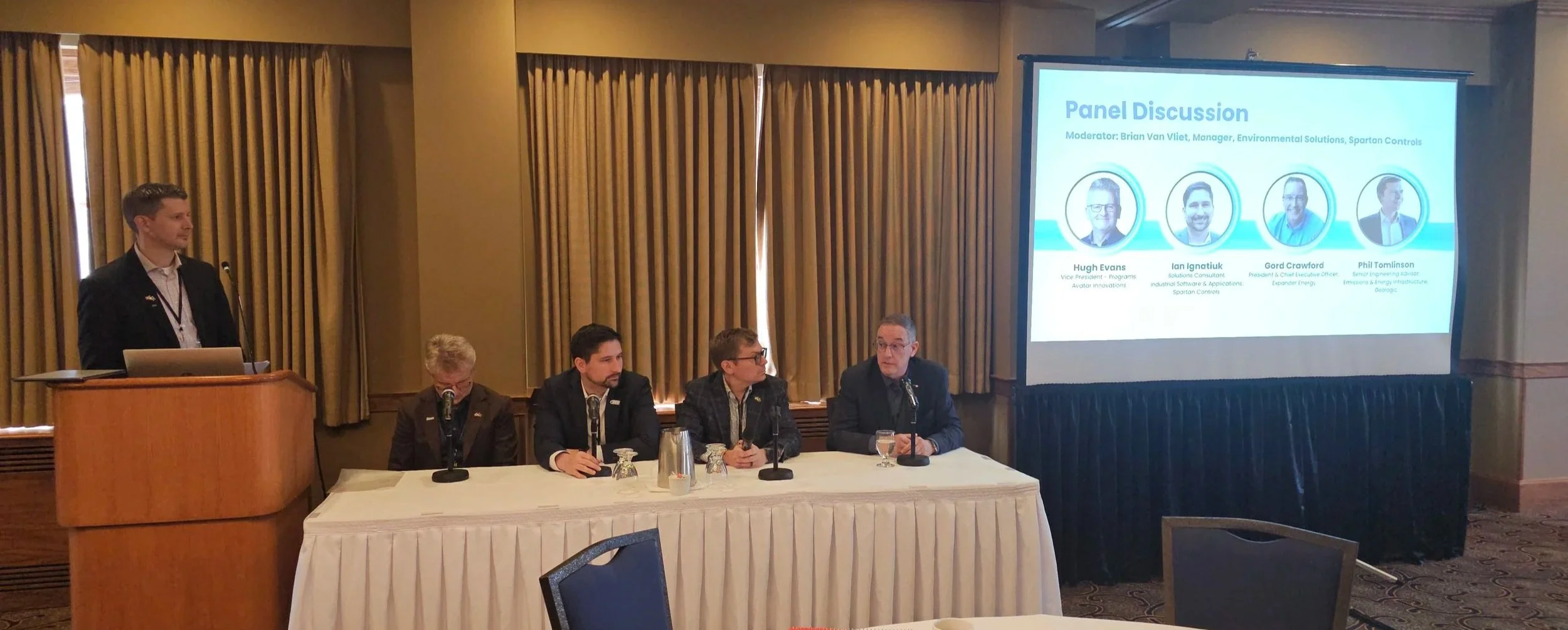
Hugh Evans of Avatar Innovations: In Hugh’s overview of his company’s path from technology development to commercial adoption, he emphasized the importance of engaging industrial operators early and earning their trust and openness regarding operational challenges. This open engagement improves innovators’ ability to fully understand barriers and develop solutions that meet customer needs.
Ian Ignatiuk of Spartan Controls: Ian demonstrated how Energy Management Information Systems, supported by reliable data, provides industrial operators with the information needed to monitor consumption, identify inefficiencies and improve energy and overall operating performance.
Gord Crawford of Expander Energy: Gord explored technologies for producing lower-carbon renewable diesel and sustainable aviation fuel. He outlined the technical and economic considerations involved in developing these fuels, emphasizing that environmental benefits must be accompanied by competitive production costs and a viable path to commercialization.
Phil Tomlinson of Geologic: Phil’s presentation demonstrated how well, facility and infrastructure data can help identify opportunities to put vented and flared natural gas to productive use. By examining where available gas, infrastructure and industrial demand intersect, his presentation illustrated Geologic’s potential to reduce wasted energy while creating entirely new commercial opportunities across industries.
The morning concluded with a panel discussion featuring all four speakers. Attendee questions explored challenges of implementation, the importance of collaboration and the potential to apply successful technologies and approaches beyond their original industries.
2. Considerations for Environmental Technology Innovators in a Changing Global Context
The afternoon broadened the discussion to geo-politics, related policy trends and programs supporting environmental innovations in Canada, and investment community imperatives influencing the future of Canadian innovation and resource development.
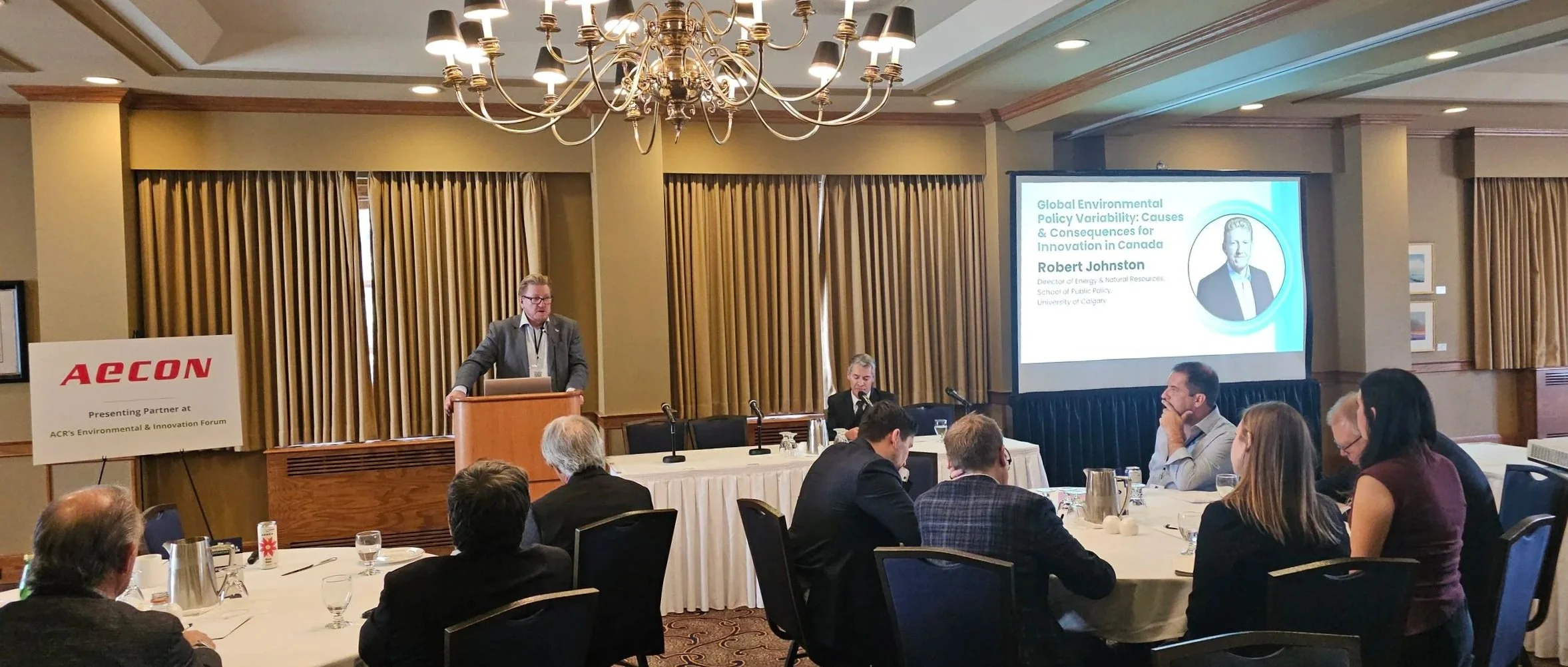
Robert Johnston of the University of Calgary's School of Public Policy examined how geopolitical developments, shifting government priorities and changing international trade relationships are affecting Alberta's resource industries. His discussion considered how political decisions, trade policies and evolving global demand can influence access to export markets, investment decisions and Canada's competitive position. Against this backdrop, he explored the importance of understanding where Alberta's strengths align with emerging market opportunities and the challenges of maintaining competitiveness amid global uncertainty.
Nicole Harbauer of Global Affairs Canada addressed the importance of international markets in helping Alberta-developed technologies achieve commercial scale. Her session explored opportunities for Canadian innovators abroad, the challenges of moving from successful pilot projects to broader market adoption outside the country, and practical advice and support that Global Affairs Canada can provide to environmental technology enterprises looking to expand internationally.
Michele Evans of Prairies Economic Development Canada highlighted federal programs and initiatives supporting business growth, productivity and competitiveness. Her presentation focused on helping Canadian companies navigate changing trade conditions, strengthen their operations and pursue opportunities in domestic markets.
The forum concluded with Yrjo Koskinen of the University of Calgary and the Institute for Sustainable Finance, who examined investment trends and financing challenges facing Canadian cleantech companies. His presentation highlighted the importance of matching financing to a technology's stage of development, demonstrating commercial demand and establishing the customer relationships needed to attract investment and support growth.
The Main Takeaways on Turning Innovation into Opportunity
Overall, the day highlighted three essential elements of turning innovation into opportunity:
· Developing effective technology and achieving widespread commercial adoption are two distinct challenges that must both be addressed in successful business strategies.
· Solutions developed for one industry may have applications in another, particularly where industries share similar environmental performance and operational efficiency objectives. Expertise gained in Alberta may also offer value in markets well beyond the province.
· External factors, including trade relationships, government priorities and programs, and access to capital, play an important role in determining how and whether innovations can reach new customers and markets.
Once again, it was ACR’s privilege to design and host this annual Environmental and Innovation Forum, creating opportunities for environmental innovators across the resource sector to share knowledge, identify common challenges and build relationships that support practical progress.
ACR thanks all speakers for sharing their expertise, attendees for their thoughtful questions, active engagement and generous feedback.
We also extend our appreciation to our event partners – Aecon, Graymont, Dentons Canada, Oil Sands Alliance and the University of Alberta – for supporting this year's forum.